My last post was about the Main Fountain Gardens at Longwood Gardens in Kennett Square, Pennsylvania. Longwood Gardens is over 1,100 acres of various gardens, both indoors and out. Their gardens feature native woodlands, roses, a large orchid collection, a waterlily court, tropicals, and more. According to their website, they are one of the most-visited gardens in the U.S. I currently live about two hours away from it and it’s become one of my favorite places to visit.
The Meadow Garden at Longwood is 86 acres of a designed natural landscape consisting of wetlands, ponds, open fields, and a forest’s edge. The field hosts well-known native plants like many different grasses, Joe-Pye-weeds, Monarda, mountain mint, goldenrod (so much goldenrod), various asters, Baptisia, milkweed, cup plant (Silphium perfoliatum) and more. The teams at Longwood maintain the Meadow with seasonal mowing and burning, controlling invasives and non-native plants, and ensuring nutrients return to the soil. The Meadow is now reaching its 12th year (Johnson, L. 2024. Link to the blog post on Longwood’s website celebrating its 10th year in 2024: Happy Tenth Anniversary to the Meadow Garden).
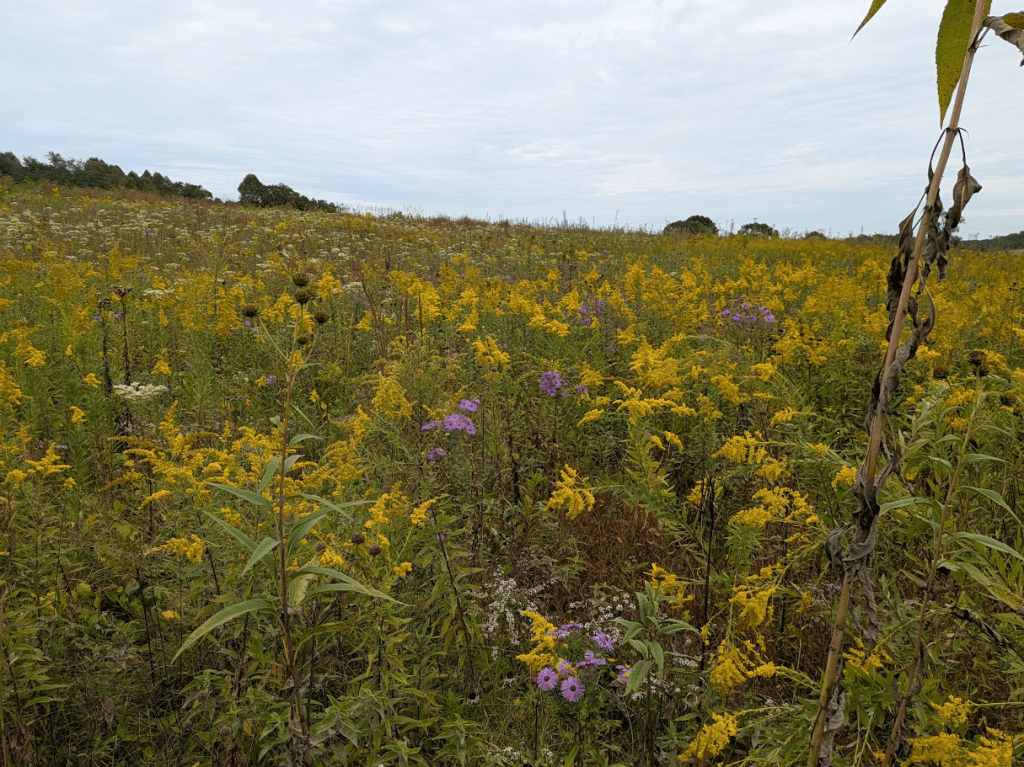
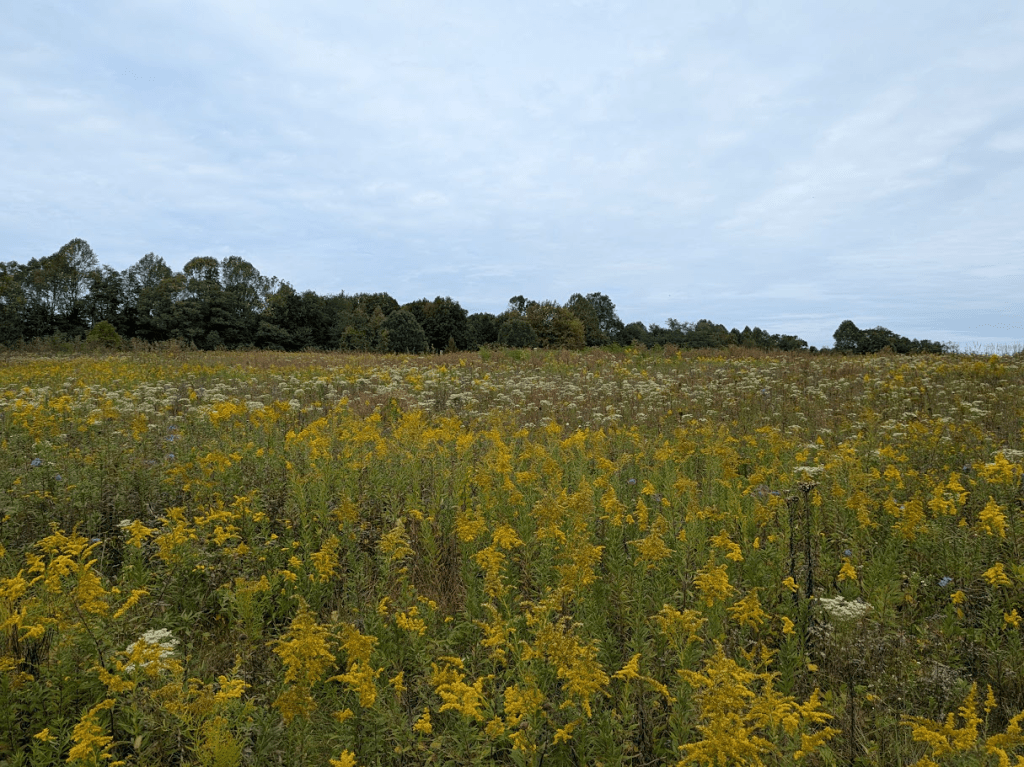
We’ve taken in the scene of this expansive meadow in the peak fall and summer seasons now. Late September last year, the field was alight with white aster and yellow goldenrod, accentuated with purple asters and backdropped with the almost alien-like appearance of spent mountain mint. The summer’s past Joe-Pye-weeds loomed over us, probably reaching 8 ft. or so.
(Credit goes to my boyfriend for the following fall photos)

Can’t forget the native sunflower, perhaps the Swamp Sunflower, Helianthus angustifolius.

It’s notoriously difficult to ID aster straight down to the species, but I think the purple one here stands out more obviously as New England Aster (Symphyotrichum novae-angliae). The white flower, which you may be tempted to identify as fleabane, is also an aster. I can’t tell you which one, but my first guess would be Frost Aster, Symphyotrichum pilosum. And of course, the beautiful goldenrod (powerful and risky in a home garden, but one of my favorites). Goldenrod may be even more difficult to identify down to the species, though we could make a few educated guesses here too.

I’m upset with myself for not capturing any photos of the mountain mint on this visit. It was past bloom, but the seed heads were left standing and honestly, they may have left one of the strongest impressions on me from the meadow. I have a tendency to not take photos when I’m really in the moment. The seedheads turn brownish, and where each individual seed was once encapsulated, is like a gray pinpoint. If you search for pictures, it may look a bit dull, but in the Meadow scene they stood out, so unique and almost strange.
I was going to include my most recent visit to the Meadow just a couple weeks ago, now in July, but this post turned out to be a bit longer than I expected so I’m going to make the summer visit its own post.

 Pretty Sky Things
Leave a comment